

Home/Veneers
Cosmetic dentistry
Dental Veneers in Woodstock
Dental veneers change the colour, shape and size of teeth and are planned carefully, as the change to the natural tooth is permanent.
What Are Dental Veneers?
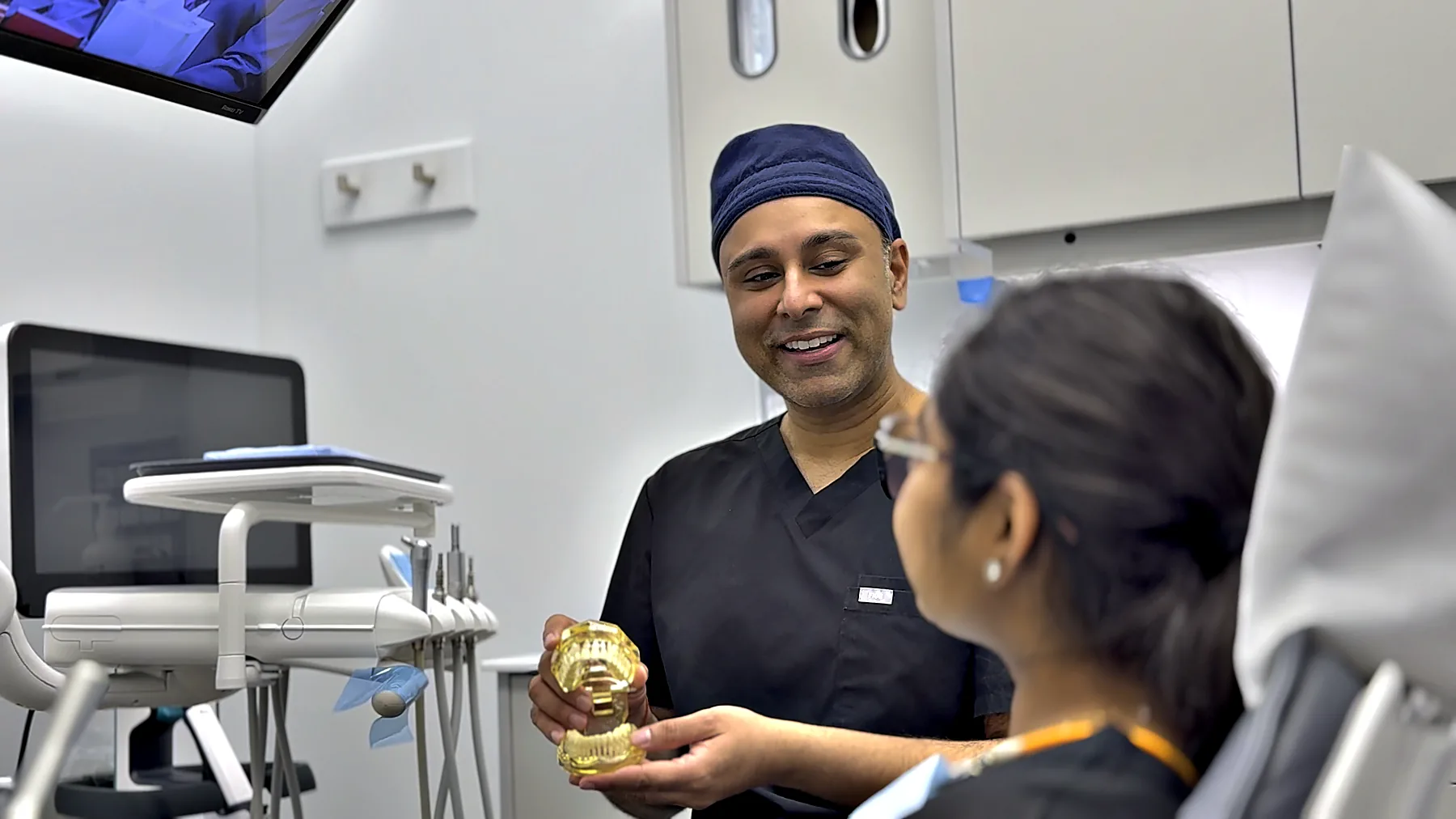
Dental veneers are thin, custom-made coverings bonded to the front surface of the teeth. A veneer changes the appearance of the visible surface of a tooth, while the natural tooth remains beneath it.
Veneers may be placed on a single tooth or on several teeth planned together as a group.
When Are Veneers Considered?
Veneers may be considered for:
- Chipped or worn front teeth
- Teeth that are uneven in shape or size
- Small gaps between the front teeth
- Discolouration that does not respond to whitening
Veneers are suited to teeth that are otherwise healthy and structurally sound. A tooth with more extensive damage may be better restored with a crown, and larger gaps may require a different approach.
Considerations Before Treatment
To make room for a veneer, a thin layer of enamel is typically reshaped from the front surface of the tooth.
Enamel does not grow back, so the change to the tooth is permanent. The tooth will always require a veneer or another restoration to cover it.
Veneers do not respond to whitening, so any whitening of the surrounding teeth is usually completed before the veneer shade is selected.
What to Expect During Treatment
Consultation and examination
The teeth, gums and bite are examined, and the patient's goals are discussed to determine whether veneers are a suitable option.
Treatment planning
The number of veneers, the preparation involved and the associated costs are explained, and treatment is scheduled once the plan is agreed.
Tooth preparation
A thin layer of enamel is reshaped from the front of each tooth, with local anesthetic used where needed.
Placement
The fit, shape and shade of each veneer are checked against the surrounding teeth before it is bonded into place.
Caring for Veneers
Veneers are cared for in much the same way as natural teeth. The tooth beneath a veneer can still develop decay, so daily care and regular dental visits remain important.
Recommended care includes:
- Brushing twice a day and flossing daily
- Avoiding biting on hard objects such as ice or pens
- Attending regular check-ups and cleanings
- Wearing a night guard where teeth grinding is a concern
Choosing the Right Option
Veneers are one of several options for improving the appearance of the teeth. Teeth whitening lightens the natural colour of the teeth without altering their structure and may be sufficient where colour is the only concern.
A crown covers the entire visible portion of a tooth and is generally better suited to a tooth with extensive damage or a large filling. Each option is explained during the consultation so patients can make an informed decision.
Vansittart Dental, Woodstock
Book a Consultation
Patients considering veneers are welcome to book a consultation to discuss their goals and have their teeth and gums assessed. The suitable options and associated costs are explained before any treatment begins.
Frequently Asked Questions
Answers to common questions about dental veneers. For anything not covered here, please contact our office.
Are Veneers Reversible?
No. Placing a veneer typically involves reshaping a thin layer of enamel, so the tooth will always need a veneer or other restoration.
How Is the Shade of a Veneer Chosen?
The shade is selected to match the surrounding teeth and is checked, along with the fit and shape, before the veneer is bonded into place.
How Long Do Veneers Last?
The lifespan of a veneer varies with the condition of the tooth, the bite, daily oral care and habits such as teeth grinding. Regular check-ups allow veneers to be monitored over time.
Can Veneers Be Whitened?
No. Veneers do not respond to whitening, so any whitening of the surrounding teeth is usually completed before the veneer shade is selected.
Should I Choose a Veneer or a Crown?
The choice depends on how much healthy tooth structure remains. A veneer covers the front surface of a tooth, while a crown covers its entire visible portion and generally suits more extensive damage.
Can a Tooth With a Veneer Still Develop Decay?
Yes. The natural tooth beneath a veneer can still decay, so brushing, flossing and regular dental visits remain important.
Related Services
Cosmetic Dentistry
Whitening and veneers to improve the colour, shape and appearance of teeth.
Learn moreTeeth Whitening
Professional treatment to lighten stained or discoloured teeth after a dental assessment.
Learn moreCrowns and Bridges
Custom restorations that repair damaged teeth and replace missing teeth.
Learn more